|
China Home, A Home Away From Home!
|
|
|
|
 |
| Homestay | Rent Room | Study Chinese | Internship & Job | Tour Service | Table Tennis | Visa Service | Apply | Contact |
|
Peking Opera Traditional Festivals in China
The Spring Festival is the biggest traditional festival in China. It falls on the first day of the first month by the Chinese lunar calendar or farming calendar - in late January or mid February. It has been celebrated for some 4,000 years. In the past, however, it was not called Spring Festival (Chun Jie) but New Year's Day (Guo Nian), After the fall of the last feudal dynasty and the establishment of a republic in 1911, when tge Gregorian calendar was officially adopted, people began calling the first day of the first month by the Gregorian calendar New Year's Day, and the first day of the first month by the lunar calendar the spring Festival. In fact, in ancient Chinese lexicons the character nian meant "harvest". In the classic Chronicles of the Spring and Autumn Period( Zuoshi Chunqiu), nian is Defined as " the ripening of hte five principal cereals". Therefore, " Having nian" meant having a good harvest. This usage is still in use today. Yuan Xiao Jie dates back to the Han dynasty (206 B.C.-A.D. 220). Sima Qian (c. 145 or 135-B.C), author of Records of the Historian, considered it an important festival when he advised Emperor Wudi to revised the calendar and adopt the Tiachu calendar (used from 104 B.C. to A.D. 85) It is a 1300-year-long tradition that for the Lantern Festival every family eat Yuanxiao(here it means a ball-like glutinous rice flour dough stuffed with sweet things). It is also known as fuyanzi (floating ball) because when boiled they float on the surface of the soup ( tangyuan) (balls in soup) or fengou (dough fruit). People eat it as a symbol of family reunion and a sweet life. Gradually people have come to call it just yuanxiao for short. At any rate, it is so tasty that everyone likes it. Staring in the Qin (221-207 B.C.) and Han dynasties, it has also become the day when people go to sweep clean the graves of their ancestors and mourn the dead. Dragon-boat races have a long history in south China. It is also said to commemorate Qu Yuan. Mid -Autumn Festival, Every year on the 15th day of the 8th lunar month comes Mid-Autumn Festival - so called because the 8th lunar month is in the middle of the autumn season, and the15th day is the middle of that month. On this night the moon is supposed to be at the fullest and brightest of the year. It is an age-old tradition that on this night people come out to enjoying the moon and the moon-lit scenery.
Looking up, I see the bright moon; Hanging my head, I feel nostalgic. For many centuries a full moon has been a symbol of family reunion, particularly reminding travelers of their loved ones at home, and the home ones of the ones who are away. Thus the day is called the Day of Reunion. Historical records show that mooncakes were first make in the shops of Chang'an ( Xi'an in the Tang Dynasty. In the Qing Dynasty they were called Reunion Cakes, and were available everywhere. The mooncake is molded with a Moon Palace and the Moon Rabbit on its surface and comes in different sizes. Today mooncakes are very popular not only in China, but also in the world.
As the centuries went by, more customs came to be used for the Double Ninth. In the capital of the Northern Song Dynasty (960-1127) every family put chrysanthemum blossoms on its doors. They also made flour cakes, ornamenting them with pomegranate seeds, chestnuts gingko kernels, pine nuts and tiny Dynasty the residents of Beijing made fancy cakes, decorating them with dates and chestnuts. Married daughters were invited back home to join their parents in eating this delicacy. These customs still exist. The autumn season is neither hot nor cold, and the sky is often cloudless -a time when the chrysanthemum flowers are the in full bloom. Such fine days are exactly right for family outings. Tea Culture
Chinese tea has been around for thousands of years. Chinese tea was first discovered and used as medicine. Then it evolved into a beverage, and further in to part of Chinese culture. Chinese tea is divided into eight classes: Green tea, Oolong tea, Black tea, Red tea, White tea, Yellow tea, Flower tea, Compressed tea.
Oolong Tea leaves are withered and spread before undergoing a brief fermentation process. Then Oolong Tea is fried, rolled and roasted. Oolong Tea is the chosen tea for the famous Kung Fu t's the serious Chinese tea drinker's tea. Aroma ranges from light to medium. Beginners in Oolong Tea should be careful as even though flavor is only mild to medium, the tea could be very strong. Chinese Tea Custom Younger generation greet elder generation with a cup of tea. That is a way to show their respect. One note is that, in organizations and families, only people of lower rank serve tea to higher rank people. At least it was like that in the old days. Today, Parents may pour kids a cup of tea at home, bosses may pour subordinates a cup of tea at restaurants. But it's just parents and bosses being nice. It would be inappropriate for low rank to expect high rank to serve tea in formal occasions. Chinese Calligraphy With a history of four to five thousand years, the art of Chinese calligraphy is rich and profound in content and has attracted the attention of artists the world over. Chinese Brush Calligraphy is one of the traditional four arts which was once an important critical standard for the Chinese literati in the imperial era and now prevails not only in China but also worldwide as a unique branch of art.
Chinese Painting Painting in the traditional style involves essentially the same techniques as calligraphy and is done with a brush dipped in black or colored ink; oils are not used. As with calligraphy, the most popular materials on which paintings are made are paper and silk. The finished work is then mounted on scrolls, which can be hung or rolled up. Traditional painting also is done in albums and on walls, lacquer work, and other media.
|
China Mobile: 86-150 7560 3273 homeinbeijing86@outlook.com |
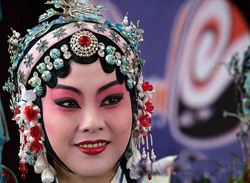 Beijing opera or Peking opera is a form of traditional Chinese theater which combines by music, vocal performance, mime, dance and acrobatics. With its fascinating and artistic accompanying music, singing and costumes, the Peking Opera is China's national opera. Full of Chinese cultural facts, the opera presents the audience with an encyclopedia of Chinese culture, as well as unfolding stories, beautiful paintings, exquisite costumes, graceful gestures and martial arts. Since Peking Opera enjoys a higher reputation than other local operas, almost every province in China has more than one Peking Opera troupes. Opera is so popular among Chinese people, especially seniors, that even "Peking Opera Month" has been declared.
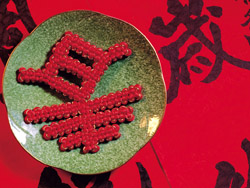 China is a unified country of many different nationalities, but Han minority is over 90 percent. For several thousand years they have developed some unique traditional festivals such as the Spring Festival, Tomb Sweeping Day Festival, the Dragon Boat Festival, and the Mid-autumn Festival. These and the customs observed at the these times are so popular that to some degree at least they reflect the history, traditions, cultural characteristics and national psychology of the Chinese people, and are therefore part of their national character.
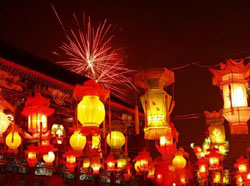 Lantern Festival, The 15th day of the 1st lunar month, another important traditional festival, follows the Spring Festival. Books written in ancient China refers to it as Shangyuan Jie (the 15th day of the 1st lunar month). It is called Yuan Xiao jie because xiao means "evening" and the whole phrase referes to the Lantern Festival, as it's called today.
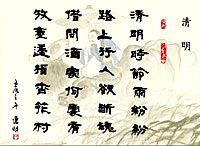 Qingming is one of the twenty-four solar terms that the ancient Chinese gave to the twenty-four divisions of their year. Coming fifteen days later than the Spring Equinox, it falls around April. 5. this is the time people go out for the warm weather, clear bright sky and gentle breeze. Ti is a good time for plowing and sowing, too. Farmers have proverbs for this time of the year:"Melons and beans are sown around Qingming" and "Tree are planted no later than Qingming".
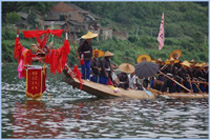 The Dragon Boat Festival, Duanwu or Duanyang Jie, falls on the 5th day of the 5th lunar month. It was the day for a tribe living in ancient states of Wu and Yue (5,000 years ago in present-day Jiangsu and Zhejiang provinces) to offer sacrifices to its totem, the dragon. To defend themselves against insects, drought, flood and other plagues, they created an imaginary dragon to which tey prayed for protection. On theis day sacrifices were made to the dragon and a dragon boat race was held.
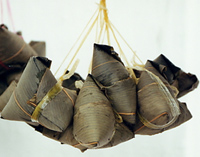 The most accepted and authoritative explanation of the festival's origin is that it commemorates Qu Yuan, a brilliant poet and a minister in charge of the Three Aristocratic Families of the State of Chu during the Warring States Period (475-221 B.C.)
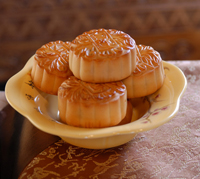 The festival is all the more mysterious and interesting because of the moon myths and legends so popular among the people. Literary men and women in all times have written odes to the moon. One of the best-known is this one by the great Tang poet Li Bai:
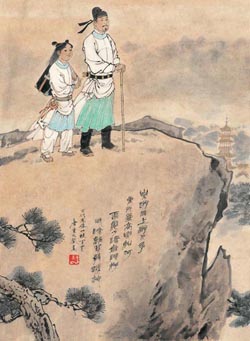 The traditional Double Ninth Festival, as one would suspect, comes on the 9th day of the 9th lunar mouth. In ancient times, the Chinese people regarded nine as a yang (positive or masculine) number. Thus the yang day in the yang mouth was called chongyang (double yang, or double ninth).The Double ninth was a festival day at least two thousand years ago in the Eastern Han Dynasty (25-220).
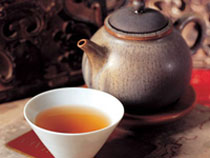 China is the origin of tea. It was in the South-West part of China that Chinese tea was first found. South-Western China falls in the tropical and sub-tropical climate zone. It is covered by large areas of primeval forests. The warm and moist environment is the perfect cradle for tea trees. Huge, 2,700 years old wild tea trees and 798 years old planted tea trees can still be found there.
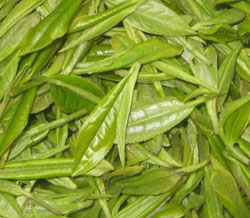 Green Tea has the most medical value and the least caffeine content of all Chinese tea classes. Aroma is medium to high, flavor is light to medium. About 50% of China's teas is Green tea.
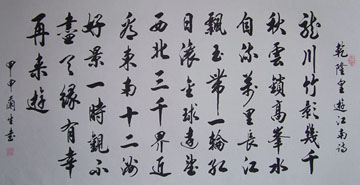 Chinese Calligraphy is so abstract and sublime that in Chinese culture it is universally regarded to be the most revealing power of a person. While one has conformed to the defined structure of words, the expression can be displayed with great creativity by individuals. To become an artist or expert in Chinese calligraphy, one has to practice word by word and stroke by stroke until the spirit of the practice gets into one's mind. Just as Chinese Qi Gong, the Chinese brush calligraphy can temper a person into a state in which one can apply sub consciousness got from the daily practice to control the concentration of ink and the compatibility of font and size of each piece or word. Calligraphy is considered as an active way of keeping one fit and health for the practice is either relaxing or self-entertaining. Historically, many calligraphy artists both in China and Japan were well known for their longevity.
 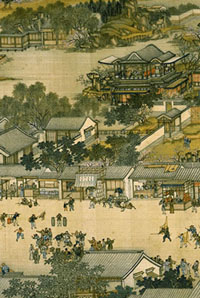 In imperial times, painting and calligraphy were the most highly appreciated arts in court circles and were produced almost exclusively by amateurs--aristocrats and scholar-officials--who alone had the leisure to perfect the technique and sensibility necessary for great brushwork. Calligraphy was thought to be the highest and purest form of painting. The implements were the brush pen, made of animal hair, and black inks made from pine soot and animal glue. In ancient times, writing, as well as painting, was done on silk. But after the invention of paper in the 1st century A.D., silk was gradually replaced by the new and cheaper material. Original writings by famous calligraphers have been greatly valued throughout China's history and are mounted on scrolls and hung on walls in the same way that paintings are.